
Tattoo placement shapes how a design looks, how much it hurts, how often people see it and how well it ages. Choosing the spot deserves as much thought as choosing the art.
Pain varies by area. Spots with more muscle or fat and fewer nerve endings, such as the outer arm, forearm, outer thigh and calf, tend to be more comfortable. Bony or sensitive areas, such as ribs, sternum, spine, feet, ankles, hands and the inner elbow, are usually more intense.
Visibility matters for work and lifestyle. Forearms, hands and necks are seen daily. Upper arms, backs, ribs and thighs are easy to cover. Thinking about your career and how you want to share the tattoo can guide the choice.
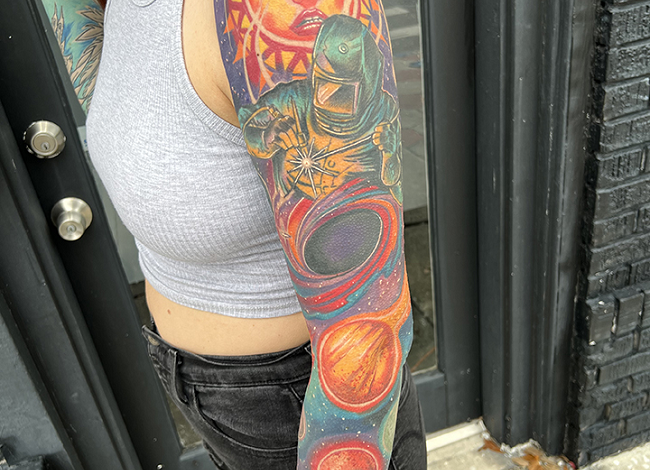
Design flow is the artist’s focus. Good tattoos follow the body’s natural lines. A long, vertical design suits a forearm or calf. Wide compositions work across the back or chest. Round designs sit well on shoulder caps. When a design is placed against the body’s shape, it can look awkward.
Aging is another factor. Hands, fingers and feet fade faster because of friction and quick skin turnover. Areas with frequent sun exposure also fade, which matters in Florida.
Future plans count too. If you might build a sleeve, place early pieces with room to connect them later.
Black Amethyst Tattoo Gallery, a custom studio in downtown St. Petersburg, plans placement during free consultations. Owner J. Michael Taylor sizes and angles each stencil on the body before tattooing, so clients can see exactly where the design will sit.


