
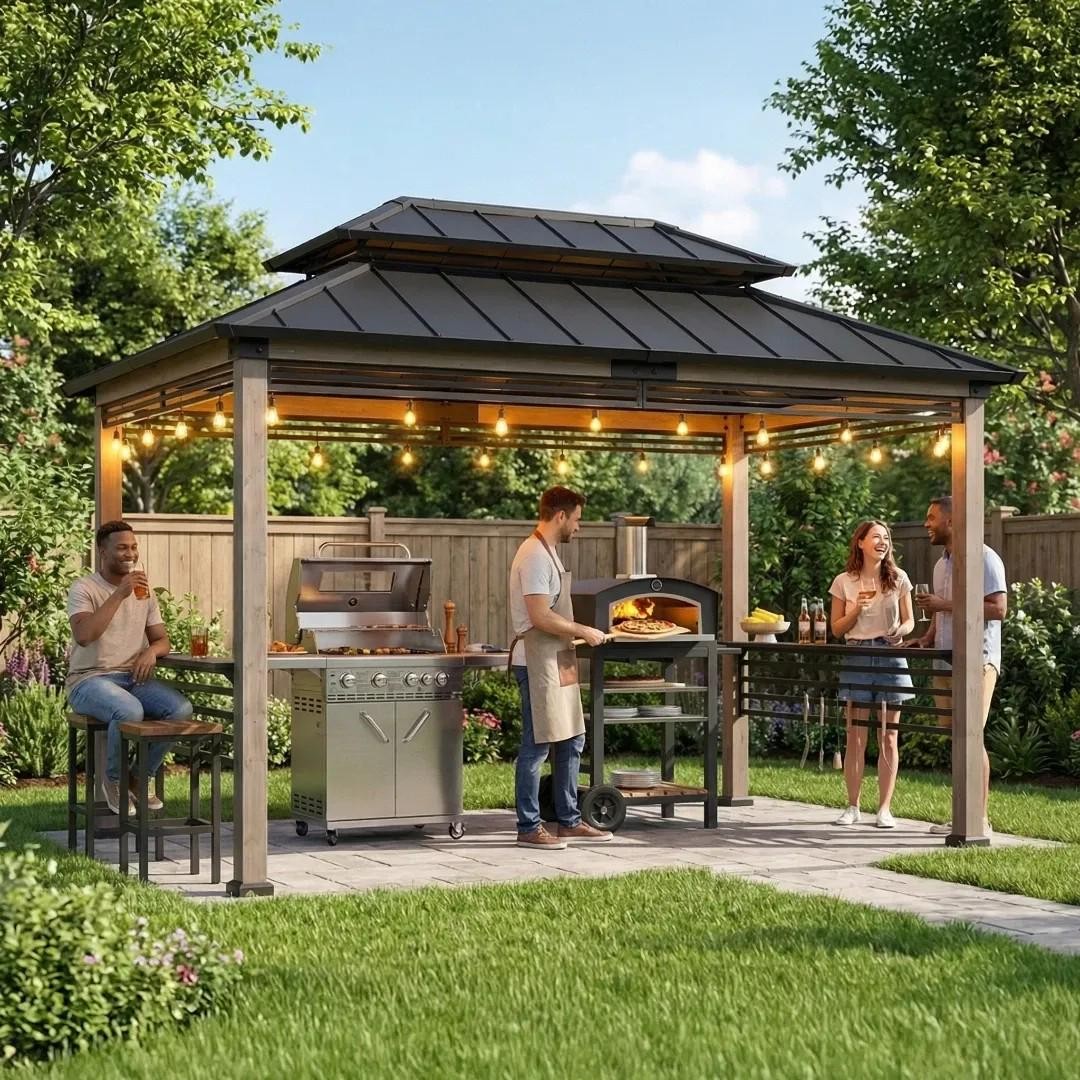
Rain does not always require an outdoor meal to be canceled, and SUNJOY’s Grill Gazebo collection is designed to place a weather-resistant roof above the cooking station. In light, steady rain, that coverage can protect the cook, preparation area, and grill controls while leaving the sides open for ventilation.
A grilling gazebo is not a severe-weather refuge. Wind-driven rain can reach the appliance, thunderstorms introduce lightning, and strong gusts may disturb flames or strain the shelter. Safe planning therefore distinguishes manageable drizzle from conditions in which cooking should stop and everyone should move indoors.
The roof is only one part of the system. Runoff, slippery ground, electrical connections, smoke movement, and the interaction between water and hot oil all affect whether the station remains usable. A rain-ready setup addresses those details before the forecast changes.
Direct Water Away from Heat and Foot Traffic
Roof edges should discharge beyond the cook’s standing area. If runoff falls onto a path, a grill mat, or the appliance’s fuel connection, the shelter may exchange one problem for another. Gutters or drainage features, where designed for the model, need to remain free of leaves and cooking residue.
The surface beneath a Grill Gazebo should drain well and retain traction when wet. Smooth tile, algae-covered paving, and loose outdoor rugs can become hazardous while a person carries hot food. Mats should be noncombustible, stable, and suitable for the grill manufacturer’s requirements instead of selected only for appearance.
Water and hot grease require strict separation. Frying or cooking with substantial oil should stop if rain can blow into the vessel. A lid, shutoff procedure, and appropriately rated fire extinguisher should be available, but the safer decision may be to postpone that cooking method when precipitation becomes unpredictable.
Preparation shelves can keep ingredients above splashing water, although food still needs covered containers and clean utensils. Raw and cooked items ought to remain separate. The grilling gazebo should not become a place where wet towels, cardboard, and packaging accumulate near burners simply because the indoor kitchen feels inconvenient.
A small dry container for matches, thermometers, and paper recipes can keep essential items usable without filling shelves with loose packaging. Towels should be stored away from burners and replaced when saturated. Organization becomes more important in rain because every extra movement increases exposure to wet surfaces.
Keep Ventilation, Power, and Weather Limits Clear
Open sides allow smoke and combustion gases to disperse. Improvised tarps attached around the Grill Gazebo may lower rain entry, but they can likewise trap heat, block exits, and increase wind loading. Side protection should be used only when the product and appliance instructions support that configuration.
Electric grills, lights, thermometers, or small appliances need outdoor-rated connections protected from water. Plugs should not rest on the ground, and extension cords should avoid puddles and walking routes. A GFCI-protected outlet or circuit provides additional protection where required by local electrical codes..
Wind direction can change flame behavior and carry smoke toward the house. The cook should watch for unstable burners, unusual smoke accumulation, or rain reaching controls. When the situation requires constant improvisation, the conditions have already moved beyond the practical role of a grilling gazebo.
Thunder is a clear stopping signal. No roof makes outdoor cooking safe during lightning. Strong gusts, hail, flooding, or rapidly falling branches likewise call for shutdown. Fuel should be turned off when safe, but no one ought to remain exposed merely to protect a meal or appliance.
The cook should also check whether rainwater is cooling one side of the grill or entering vents. Sudden temperature changes can affect cooking and, in some materials, contribute to damage. Manufacturer guidance should determine whether the appliance is suitable for continued operation under the observed conditions.
Choose a SUNJOY Shelter for Routine Rain Protection
SUNJOY offers fabric-top and hardtop grill shelters with steel or aluminum frameworks, several roof profiles, and useful storage features. Bar shelves, hooks, and work surfaces can keep tools organized when the ground is wet. Their presence does not change the clearance required by the grill manufacturer.
A fabric roof may suit seasonal use and requires complete drying before storage. A hardtop Grill Gazebo may supply a more permanent station, yet snow and debris should be removed according to product guidance. Anchors, roof connections, coatings, and drainage paths deserve periodic inspection in either case.
Before purchase, the household should compare the shelter’s usable interior with the grill’s open-lid dimensions, side tables, fuel connection, and service access. Roof overhang and runoff direction matter as much as nominal size. Local setbacks and fire rules may affect where the grilling gazebo may be installed.
Under mild rain, a well-positioned SUNJOY Grill Gazebo can preserve a steady cooking routine and a dry preparation surface. Its value remains conditional: sensible weather limits, safe drainage, reliable ventilation, and disciplined shutdown decisions determine whether rain protection remains practical instead of risky.
Guests should wait indoors or under a separate shelter instead of crowd the SUNJOY grilling gazebo. A compact cooking area becomes unsafe when umbrellas, wet coats, and serving plates compete for space. Limiting access gives the cook a clear path and keeps the roof’s protection focused on the task. A dry indoor serving point can receive finished dishes without bringing extra traffic back under the roof.

