
Outdoor roofing collects more than visible dust. Pollen, bird residue, leaves, airborne pollution, and mineral deposits from rain can gradually make a once-bright surface look dull. Regular care helps preserve the appearance of the roof and keep drainage paths clear, especially on structures exposed throughout the year. For homeowners considering a metal gazebo, roof maintenance should be viewed as a simple routine rather than an occasional deep-cleaning project.
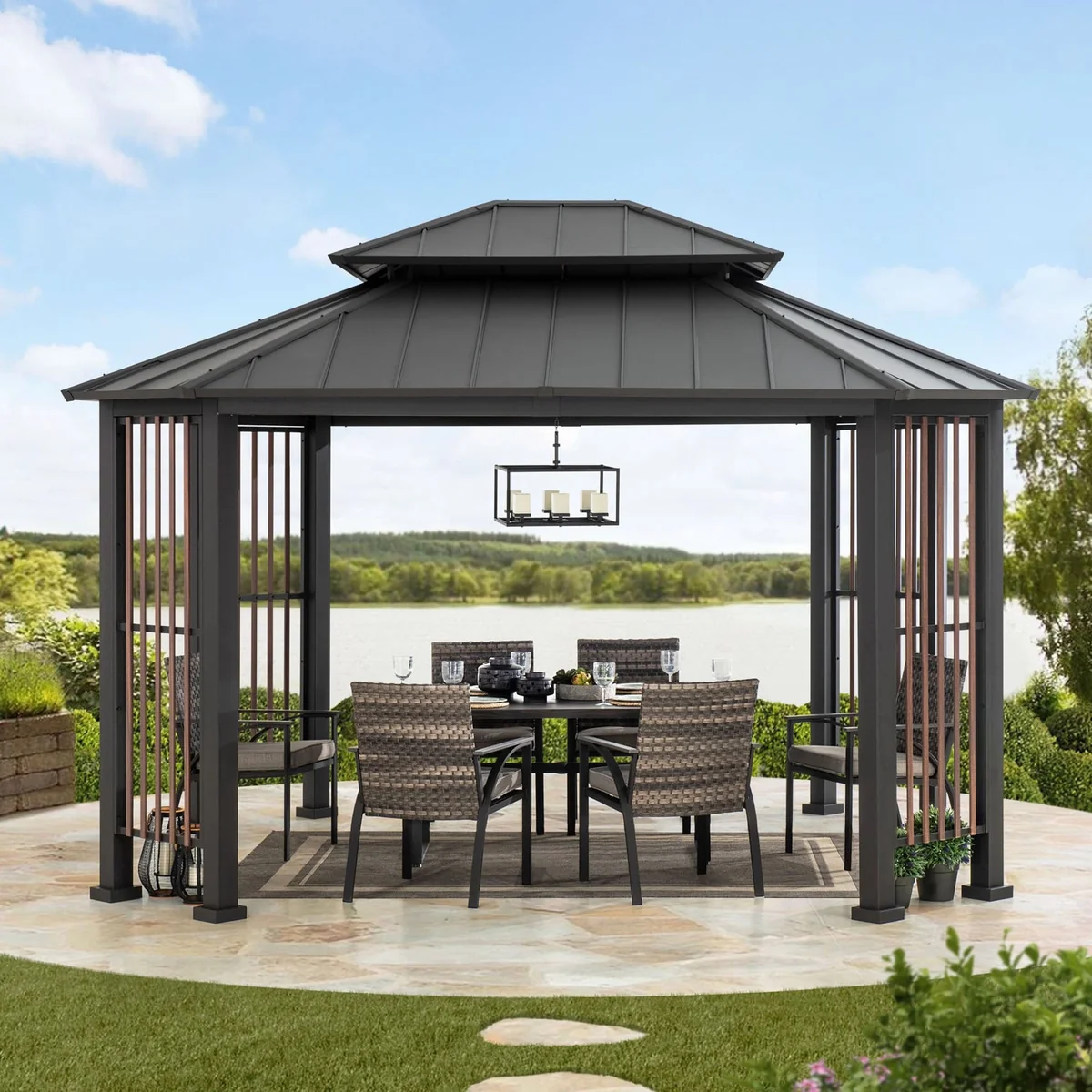
SUNJOY’s hardtop gazebo designs, with features such as multiple support posts and ground stakes, illustrate how structural stability and maintenance work together to support long-term outdoor use.
Start With The Right Cleaning Schedule
Roof cleaning does not need to happen every week. Seasonal changes usually provide a practical rhythm, with spring and early autumn offering good opportunities to inspect the surface and remove accumulated debris. Properties surrounded by trees may require additional attention because leaves, sap, and pollen can gather quickly.
Weather conditions should also influence timing. Cleaning immediately after heavy rain may be less convenient because surfaces remain wet, while extremely hot afternoons can cause cleaning solutions to dry too quickly. Mild, dry weather generally provides better working conditions and makes surface inspection easier.
Before reaching the roof, users should check the manufacturer’s care guidance and assess whether a ladder is suitable for the structure. Stable footing matters more than speed, and roof panels should not be treated as walking surfaces unless specifically designed for that purpose.
Remove Debris Before Washing
Loose debris should come off before water or detergent enters the process. Soft brushes, handheld blowers, or other non-abrasive methods can help clear leaves and dust without unnecessarily scratching the finish. Larger pieces should be removed carefully rather than dragged across painted or coated panels.
Once loose material has been cleared, ordinary water can reveal where additional cleaning is needed. Dark streaks, bird residue, and areas beneath nearby trees often require more attention than exposed sections of the roof.
Harsh tools can create problems that ordinary dirt does not. Wire brushes, abrasive pads, and aggressive scraping may damage protective coatings, leaving the underlying material more vulnerable to moisture and oxidation. Gentle contact is therefore preferable, particularly when the roof has a decorative finish.
Choose Cleaning Products Carefully
Mild household soap diluted with water is often sufficient for routine exterior cleaning, provided the manufacturer’s instructions permit it. Strong chemicals should not be selected simply because they appear faster; certain formulas can react with coatings, discolor finishes, or affect nearby components.
A soft sponge or microfiber cloth can handle accessible areas without creating unnecessary abrasion. Larger roof sections may be rinsed with a garden hose, although concentrated spray should be avoided around seams, joints, or other areas where water could enter unwanted spaces.
Special attention belongs to residue left behind after washing. Soap that dries on the roof can leave a film or residue that makes the surface look dull. A thorough rinse helps keep the surface cleaner and allows the finish to dry naturally.
Protect The Finish And Drainage
Cleanliness contributes to appearance, but drainage deserves equal attention. Leaves and compacted debris can collect near edges or drainage channels, restricting the movement of rainwater. Checking these areas during routine maintenance helps prevent water from lingering where it should flow away.
Sun exposure creates another maintenance factor. Ultraviolet radiation gradually affects many exterior finishes, while repeated cycles of heating and cooling place additional stress on coatings and joints. Regular inspection can reveal fading, peeling, or unusual discoloration before the problem spreads.
Metal pavilion structures benefit from attention to connections as well as roof panels. Fasteners, brackets, seams, and frame junctions should be checked for visible corrosion or looseness. Such observations do not automatically indicate structural damage, but they can signal that closer inspection or manufacturer-approved maintenance is appropriate.
Build A Practical Long-Term Routine
Keeping records can make seasonal maintenance easier. A simple note of cleaning dates, visible changes, and areas requiring attention helps homeowners recognize whether staining is recurring or whether certain sections need closer inspection. Consistency matters more than using an elaborate maintenance system.
Surrounding landscaping also affects roof cleanliness. Overhanging branches can drop leaves and sap, while dense vegetation may increase moisture around the structure. Thoughtful pruning and adequate airflow can reduce the amount of organic material reaching the roof without altering the overall garden design.
Different finishes may require different care, so generic cleaning advice should never override the manufacturer’s instructions. The same principle applies to replacement parts, touch-up coatings, and repair products. Compatibility matters because an unsuitable product may create a more visible problem than the original stain.
Conclusion
Roof care becomes much simpler once it is treated as routine outdoor upkeep rather than a major restoration task. Gentle debris removal, mild cleaning methods, sensible rinsing, and periodic inspection can help preserve the appearance of exterior roofing while drawing attention to drainage or hardware issues that deserve further assessment. Such habits are especially useful for owners who expect their outdoor shelter to remain part of the landscape through changing seasons.
SUNJOY‘s hardtop gazebo designs show how structural stability and surface maintenance are connected in practical use. For a Metal Gazebo or a similar Metal pavilion structure, careful cleaning should focus on protecting the finish, keeping drainage paths clear, and following the care instructions for the specific roofing system.


